
Finding window treatments that fit your budget does not mean settling for poor performance, limited choices, or an improper fit. The key is understanding which features matter most for your windows and investing in the options that will make the greatest difference in your daily life. With professional guidance, homeowners can balance appearance, privacy, light control, durability, and cost.
Custom budget-friendly shades and blinds in Hampton Bays can be designed around the specific dimensions and conditions of each room. Instead of paying for unnecessary upgrades or choosing an unsuitable ready-made product, you can select materials, operating systems, and features that address the way you actually use your windows.
East Coast Window Fashions serves Hampton Bays, Long Island, and surrounding areas with custom window treatments for residential and commercial properties. The company offers blinds, shades, drapery, shutters, and motorization, making it possible to compare several product categories before deciding which option provides the best value.
What Makes a Window Treatment Budget-Friendly?
A budget-friendly window treatment is not necessarily the product with the lowest initial price. The least expensive treatment may be costly over time if it breaks, fits poorly, lacks necessary light control, or must be replaced after only a short period.
A better way to evaluate cost is to consider what you receive for the investment. A well-selected treatment should fit the window, operate reliably, provide the desired privacy, and suit the room’s exposure to sunlight. It should also be made from materials appropriate for the way the space is used.
When evaluating budget-friendly shades and blinds in Hampton Bays, homeowners should consider the complete value of each option:
- Initial product and installation cost
- Expected durability
- Ease of operation
- Privacy and light control
- Suitability for the window’s size and location
- Maintenance requirements
- Available warranties
- Potential for future motorization
- Ability to coordinate treatments throughout the property
Prioritizing the right features helps prevent overspending while avoiding products that do not adequately address the window.
Why Custom Window Treatments Can Be a Better Value
Ready-made blinds and shades may seem more affordable because their advertised price is often low. However, standard products are manufactured in a limited selection of sizes. If a Hampton Bays home has unusually wide, narrow, tall, shallow, or grouped windows, an off-the-shelf treatment may leave large gaps or fail to operate correctly.
Poorly sized treatments can also reduce privacy. A shade that is too narrow may leave the room visible from outside, while a blind that is too short may not cover the entire glass. Oversized products can rub against the frame, hang unevenly, or become difficult to raise and lower.
Custom treatments are measured for the actual opening. This improves fit and helps homeowners avoid repeatedly purchasing replacements in an effort to find something suitable. Custom products also allow the material, color, control style, and mounting position to be selected for the individual room.
The goal of budget-friendly shades and blinds in Hampton Bays is not to add every possible feature. It is to create a dependable treatment with the necessary features for each window.
Set Priorities Before Comparing Products
A clear list of priorities makes it easier to stay within a project budget. Before looking at samples, determine what each window treatment must accomplish.
Questions to consider include:
- Is privacy the primary concern?
- Does the window receive intense morning or afternoon sunlight?
- Is glare interfering with work, television viewing, or daily activities?
- Does the room need to remain bright when the treatment is closed?
- Is room-darkening coverage important?
- Will the treatment be adjusted several times a day?
- Is the window difficult to reach?
- Does the property need a durable option for frequent use?
- Are there children or pets in the household?
- Will several windows need coordinated treatments?
The answers may differ from one room to another. A bedroom might require stronger light control, while a living room may need filtered daylight. A commercial workspace may place greater importance on glare reduction and simple operation.
This room-by-room evaluation helps direct more of the budget toward windows that need specialized features while keeping simpler windows economical.
Affordable Blind Options for Hampton Bays Homes
Blinds use adjustable slats that can be tilted to control light and privacy. Their familiar operation and broad range of materials make them a practical option for many rooms.
Faux Wood Blinds
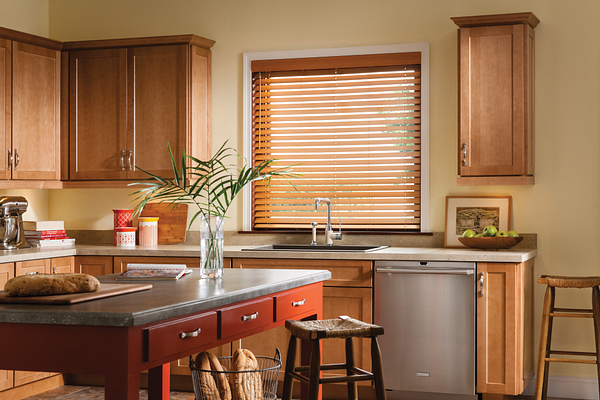
Faux wood blinds offer the appearance of painted or stained wood with materials designed to resist moisture and everyday wear. They can provide effective privacy when closed and allow homeowners to direct light by adjusting the slats.
Because faux wood materials are generally more economical than genuine wood, they are often considered for kitchens, bathrooms, rental properties, and frequently used rooms. Their easy-to-clean surface also supports long-term practicality.
Weight should be considered on very wide windows. A large faux wood blind may become heavy to raise, so multiple blinds or another treatment category may be more appropriate.
Aluminum Blinds
Aluminum blinds provide adjustable light control with narrow, lightweight slats. They are often among the more economical custom blind choices and can work well in offices, utility areas, and streamlined residential spaces.
Their compact profile can be useful in shallow window openings. They are also available in different colors, allowing the treatment to coordinate with the window frame or surrounding finishes.
Although aluminum blinds are practical, the slats may bend if handled roughly. They are most appropriate where users can operate them carefully.
Wood Blinds
Real wood blinds bring natural material and substantial slats to the window. They typically cost more than faux wood or aluminum options, but they may provide worthwhile value in rooms where their weight, finish, and appearance are especially important.
Homeowners managing a limited budget do not have to select wood blinds for every room. They can use them in prominent areas and choose complementary faux wood blinds elsewhere.
Comparing these options with a professional helps homeowners identify budget-friendly shades and blinds in Hampton Bays that meet both practical and financial goals.
Affordable Shade Options for Long Island Homes
Shades are made from continuous material rather than adjustable slats. Different constructions provide different levels of light filtration, privacy, insulation, and visual softness.
Roller Shades
Roller shades are among the most versatile window treatments. Their straightforward construction allows the material to roll neatly around a tube when raised. Depending on the selected fabric, they can gently filter light, provide privacy, reduce glare, or darken a room.
Roller shades are available at a range of price points. A simple light-filtering material with manual operation can be an economical choice, while specialty fabrics and motorization can be added where needed.
Their compact design makes roller shades particularly useful for windows where homeowners want the treatment to occupy minimal space when open.
Cellular Shades
Cellular shades contain honeycomb-shaped pockets that trap air at the window. This construction can help improve comfort near the glass and may reduce heat transfer.
Single-cell designs are generally more economical than products with additional cell layers. Light-filtering and room-darkening materials allow the shade to be tailored to the space.
For homes exposed to Long Island’s changing temperatures, cellular shades may provide valuable insulation in addition to privacy and light control. That combination can make them a strong long-term choice even if the initial price is higher than that of a basic blind.
Pleated Shades
Pleated shades use fabric folded into crisp pleats. They provide a streamlined appearance and may be available at an accessible price point.
Unlike cellular shades, most pleated shades use a single layer and do not contain insulating air pockets. They can still provide privacy and light filtration, depending on the material.
Roman Shades
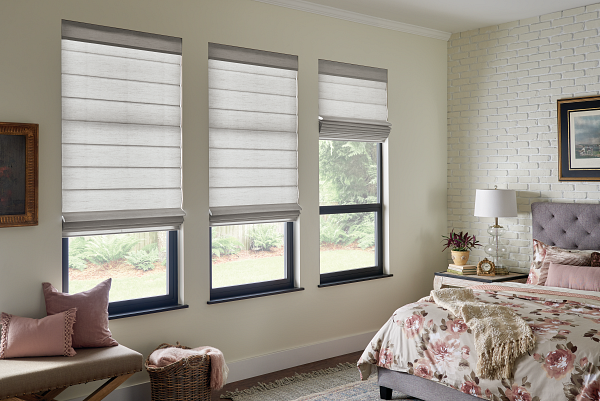
Roman shades bring the softness of fabric to the convenience of a shade. When raised, the material gathers into folds; when lowered, it provides broad fabric coverage across the window.
Roman shades may cost more than basic roller or pleated shades because their construction uses additional fabric and detailed fabrication. However, homeowners who want a fabric treatment may find that Roman shades provide an effective combination of appearance and function.
Woven Shades
Woven shades use natural-looking woven materials to create texture and filter sunlight. The openness of the weave affects privacy, so some products may require a lining.
Adding a privacy or room-darkening lining increases the cost but can make the shade more useful in bedrooms and street-facing rooms. Unlined woven shades may be appropriate in spaces where softly filtered light is the main priority.
A knowledgeable provider can help compare these products and recommend budget-friendly shades and blinds in Hampton Bays based on the size, exposure, and function of each window.
Light-Filtering Versus Room-Darkening Materials
Light control is one of the most important decisions in any window treatment project. Selecting more coverage than a room needs can increase the price unnecessarily, while choosing too little can result in dissatisfaction.
Light-filtering materials soften incoming sunlight while allowing the room to remain naturally bright. The degree of privacy varies by material, and some fabrics may reveal shadows after dark when indoor lights are on.
Room-darkening materials block significantly more light. They are often selected for bedrooms, nurseries, media spaces, and rooms affected by streetlights or early morning sun. These materials may also reduce glare and provide greater daytime privacy.
Room-darkening does not always mean complete darkness. Light can still enter around the sides of an inside-mounted shade. An outside mount with additional overlap may reduce these gaps, but it can require a larger treatment.
Homeowners can manage costs by reserving room-darkening fabrics for rooms that truly need them and using light-filtering options elsewhere.
Choosing Between Inside and Outside Mounts
An inside-mounted treatment fits within the window frame. It creates a neat, recessed appearance and keeps surrounding trim visible. The window opening must have enough depth to hold the required brackets and headrail.
Inside-mounted shades and blinds usually have small gaps along the sides so the product can operate without rubbing against the frame. Those gaps may allow some light into the room.
An outside-mounted treatment attaches above or beyond the opening. It can cover more of the glass, conceal shallow or uneven frames, and reduce visible gaps. An outside mount may also make the window appear larger.
The mounting choice should be based on the window’s construction and the desired coverage—not price alone. Professional measurement can prevent ordering a treatment that does not fit or cannot be securely installed.
Accurate mounting decisions help budget-friendly shades and blinds in Hampton Bays provide better performance without avoidable replacement costs.
Use Different Treatments in Different Rooms
One of the easiest ways to control the project budget is to avoid assuming that every room needs the same product. Consistency can be achieved through related colors or finishes even when the treatment categories differ.
A homeowner might choose:
- Faux wood blinds for kitchens and bathrooms
- Light-filtering roller shades for living areas
- Room-darkening cellular shades for bedrooms
- A glare-reducing material for a home office
- A durable blind for a frequently used commercial space
- Motorization only for large or difficult-to-reach windows
This strategy directs the budget toward the features that matter in each space. It can also avoid overcomplicating windows with straightforward needs.
Treatments can still appear coordinated from outside the home. Similar backing colors or consistent neutral tones can create a cohesive exterior appearance even when the interior products differ.
Focus on High-Priority Windows First
A whole-home window treatment project does not always have to be completed at once. Homeowners can begin with windows that create the greatest privacy, glare, or temperature problems.
Bedrooms and bathrooms are often priorities because they require reliable privacy. Street-facing windows may also need immediate coverage. Rooms exposed to strong afternoon sun might be addressed before windows in shaded locations.
Starting with the highest-priority areas allows homeowners to evaluate how selected products perform before applying similar solutions elsewhere. It can also spread the investment over multiple phases.
When purchasing budget-friendly shades and blinds in Hampton Bays, homeowners should discuss future plans during the initial consultation. Product colors and collections may change over time, so the provider can recommend strategies for maintaining consistency across phases.
Avoid Features You Will Not Use
Custom window treatments offer many optional features, but not every upgrade is necessary for every window. The most economical design is usually one built around real household needs.
For example, a basic manual roller shade may be entirely suitable for a small, easily reached window. Adding motorization there may provide limited practical benefit. However, motorization may be highly valuable on a large window, a tall opening, or a group of shades that must move together.
Decorative accents, specialty materials, premium finishes, and advanced controls can increase the price. They may be worthwhile when they contribute to the desired result, but homeowners should understand what each feature does before including it.
A professional consultation can distinguish between features that improve performance and those that are optional preferences.
When Motorization Is Worth the Investment
Motorization increases the initial cost of a shade or blind, but it can provide long-term convenience in the right setting. Motorized treatments can be controlled with a compatible remote, wall control, app, or automated system, depending on the selected product.
The feature may be especially useful for:
- High or difficult-to-reach windows
- Wide shades that are cumbersome to operate manually
- Groups of treatments adjusted at the same time
- Windows behind furniture
- Commercial properties with several windows
- Households that want scheduled privacy or sunlight control
Instead of motorizing every window, homeowners can identify the locations where automation would provide the greatest benefit. Manually operated treatments can be used elsewhere to keep the overall project within budget.
East Coast Window Fashions offers motorization for residential and commercial window treatments and can explain which products can be automated now or potentially upgraded as part of a broader plan.
Long-Term Value and Durability
Durability should be considered alongside the purchase price. A low-cost treatment that quickly warps, bends, frays, or becomes difficult to operate may not be economical over time.
The most appropriate material depends on the conditions around the window. A product used several times a day needs reliable hardware and controls. A treatment in a humid room should be made from a suitable material. Large windows may require reinforced or divided products to prevent excessive weight.
Proper installation also contributes to durability. Brackets must be attached securely, the treatment must remain level, and moving components need sufficient clearance.
Choosing budget-friendly shades and blinds in Hampton Bays with the assistance of a professional helps homeowners evaluate expected performance rather than focusing exclusively on the lowest advertised price.
Window Treatments for Coastal Long Island Conditions
Hampton Bays is influenced by its coastal Long Island location. Homes may experience bright sunlight, humidity, temperature changes, and seasonal variations in how rooms are used.
Strong sunlight can cause glare and fade interior-facing treatment materials over time. Suitable fabrics, finishes, and linings can help manage exposure. Rooms facing west may need stronger afternoon protection, while north-facing rooms may benefit from light-filtering products that preserve brightness.
Humidity should also influence material selection. Faux wood blinds and certain synthetic shade fabrics may be easier to maintain in moisture-prone spaces than some natural materials.
A local window treatment professional can evaluate how the window is exposed and recommend products designed for those conditions.
Budget-Conscious Treatments for Bedrooms
Bedroom treatments need to provide reliable privacy, especially after dark. Many homeowners also want to reduce early morning sunlight and outside lighting.
Room-darkening roller or cellular shades can be practical choices. Cellular shades may add insulation, while roller shades provide straightforward coverage in a compact design. If complete darkness is not necessary, a privacy or light-filtering material may be more economical.
The mount affects the result. An inside mount generally leaves narrow light gaps at the edges. An outside mount can provide greater overlap but requires more material and wall space.
Homeowners should decide how much darkness they realistically need before selecting a fabric. Paying for the highest degree of light control may not be necessary in a guest room, while it may be valuable in a primary bedroom used every night.
Affordable Treatments for Living and Family Rooms
Living and family rooms often benefit from window treatments that preserve natural light while reducing glare and providing evening privacy.
Light-filtering roller, cellular, pleated, or woven shades can soften daylight without making the room feel closed. Blinds provide adjustable slats that allow users to redirect sunlight while maintaining some visibility toward the outdoors.
For windows near a television, glare control may be more important than full room darkening. The treatment should reduce direct reflections while preserving enough daylight for comfortable daytime use.
When several windows appear together, matching products can provide a unified look. Professional measurement helps ensure the treatments align evenly across the group.
Practical Window Coverings for Kitchens and Bathrooms
Kitchens and bathrooms require materials that can tolerate regular use and changing moisture levels. Faux wood blinds, certain roller shade fabrics, and other easy-to-maintain materials may provide practical solutions.
Privacy is especially important in bathrooms. The treatment should limit visibility both during daylight and after dark. Light-filtering fabrics should be evaluated carefully because some become more transparent when illuminated from inside.
Kitchen treatments should be positioned away from direct heat and moisture sources. A simple operating system and wipeable surface can make ongoing care easier.
These rooms demonstrate why budget-friendly shades and blinds in Hampton Bays should be selected according to function rather than using one product indiscriminately throughout the home.
Window Treatments for Home Offices
A home office requires balanced light. Too much sunlight can cause screen glare, while an overly dark treatment can make the space feel less comfortable during the workday.
Blinds allow users to tilt the slats and redirect light. Solar or glare-reducing roller materials may preserve some outdoor visibility while reducing bright sunlight. Light-filtering cellular shades can soften daylight and improve comfort near the glass.
The position of the desk and computer screen should be considered during the consultation. A treatment that performs well on one wall may be less effective on a window directly behind or opposite a monitor.
Motorization may be useful if the shade is located behind office equipment or furniture, but manual operation may be sufficient for an easily reached window.
Cost-Conscious Solutions for Commercial Properties
Commercial window treatments need to be durable, easy to operate, and appropriate for the activities conducted in the space. Offices may require glare control, while customer-facing businesses may want privacy without eliminating natural light.
Roller shades and blinds are common commercial options because they provide straightforward operation and can be specified for multiple windows. Coordinated materials help create a consistent appearance throughout the property.
Large groups of windows should be evaluated carefully. Dividing wide treatments into separate units can make operation easier and reduce strain on the hardware. Motorization may provide value in conference rooms, reception spaces, and areas with many windows.
East Coast Window Fashions provides blinds, shades, drapery, shutters, and motorization for both residential and commercial projects throughout Long Island.
The Importance of Accurate Measurements
Measurement errors can turn an affordable project into an expensive problem. Windows that appear identical may differ slightly in width, height, or depth. Frames may also be uneven or out of square.
A professional measures each opening at multiple points and checks for obstructions such as locks, handles, and molding. The chosen product must have enough clearance to operate without rubbing against the frame.
For outside-mounted treatments, the professional determines how much overlap is appropriate and identifies a secure installation surface. Wide windows may require special mounting support or multiple treatments.
Professional measurement helps ensure that budget-friendly shades and blinds in Hampton Bays fit correctly the first time.
Professional Installation Protects Your Investment
Even a correctly sized product may perform poorly if it is not installed properly. A blind or shade that is not level may raise unevenly, place unnecessary strain on its controls, or fail to sit correctly within the opening.
Professional installers use appropriate mounting hardware and verify that the treatment can move freely. They can also demonstrate proper operation and explain care requirements.
Installation is particularly important for large treatments, motorized systems, commercial projects, and windows requiring specialized mounting. Secure installation protects the treatment and the surrounding window frame.
The value of professional service lies in the complete result: an appropriate product, accurate fit, secure mounting, and reliable operation.
Maintaining Blinds and Shades
Regular care can extend the useful life of window treatments. Blinds can generally be dusted with a soft cloth or vacuumed using a brush attachment at low suction. Shade fabrics should be cleaned according to the manufacturer’s instructions.
Homeowners should avoid forcing a treatment that becomes difficult to raise, lower, or tilt. Continued force can damage internal components. If the product begins operating unevenly, professional guidance may prevent a minor issue from becoming more serious.
Moisture should not be applied to fabrics or natural materials unless the care instructions specifically permit it. Spot-cleaning products can cause discoloration or water marks on some shades.
Gentle, consistent operation is one of the simplest ways to protect budget-friendly shades and blinds in Hampton Bays and maximize their long-term value.
Questions to Ask During Your Consultation
A complimentary in-home consultation gives homeowners an opportunity to compare products in the rooms where they will be installed. Useful questions include:
- Which products fit my budget and provide the privacy I need?
- What is the difference between light-filtering and room-darkening fabrics?
- Which materials are appropriate for humid rooms?
- Would an inside or outside mount work better?
- Which treatments are easiest to maintain?
- Can I use different products while keeping a coordinated appearance?
- Which windows would benefit most from motorization?
- Can the project be completed in phases?
- What warranties are available?
- How will the treatment look from outside the property?
- What installation requirements should I consider?
- Which option is likely to provide the best long-term value?
Being open about the available budget helps the professional recommend suitable products without presenting unnecessary upgrades.
Work With a Local Hampton Bays Window Treatment Professional
Local knowledge is valuable when choosing treatments for a Long Island property. Sun exposure, humidity, window construction, privacy, and seasonal use can all influence which products will perform well.
East Coast Window Fashions works with homeowners and commercial property owners to identify solutions suited to their windows and priorities. Instead of relying on generic product dimensions or trying to compare materials without guidance, customers can view samples, discuss operating options, and receive professional measurements.
The result is a more informed approach to selecting budget-friendly shades and blinds in Hampton Bays, with recommendations based on the actual property rather than assumptions.
Schedule a Complimentary In-Home Consultation
Affordable custom window treatments begin with clear priorities and accurate information. By considering how each room is used, homeowners can invest in the features that matter while avoiding unnecessary costs.
East Coast Window Fashions offers blinds, shades, drapery, shutters, and motorized window coverings for residential and commercial properties throughout Hampton Bays, Long Island, and surrounding areas. Whether you are covering one priority window or planning treatments for an entire property, professional guidance can help you compare options and build a practical plan.
To explore budget-friendly shades and blinds in Hampton Bays, schedule a complimentary in-home consultation with East Coast Window Fashions and receive a customized quote. Call (631) 513-5499 or email jeanine.ecwf@gmail.com to get started.
No responses yet